Concrete sidewalk building in Lewiston ID - a walk you can keep your footing on
Cracked, heaved or sinking walk tripping people up? We dig out, pack the base and pour a textured walk that drains and holds.
Get your sidewalk looked at and priced
Call (208) 848-5044 or use the form, so we can check which office covers your address before you settle on a plan.
What does it take to build a concrete sidewalk in Lewiston?
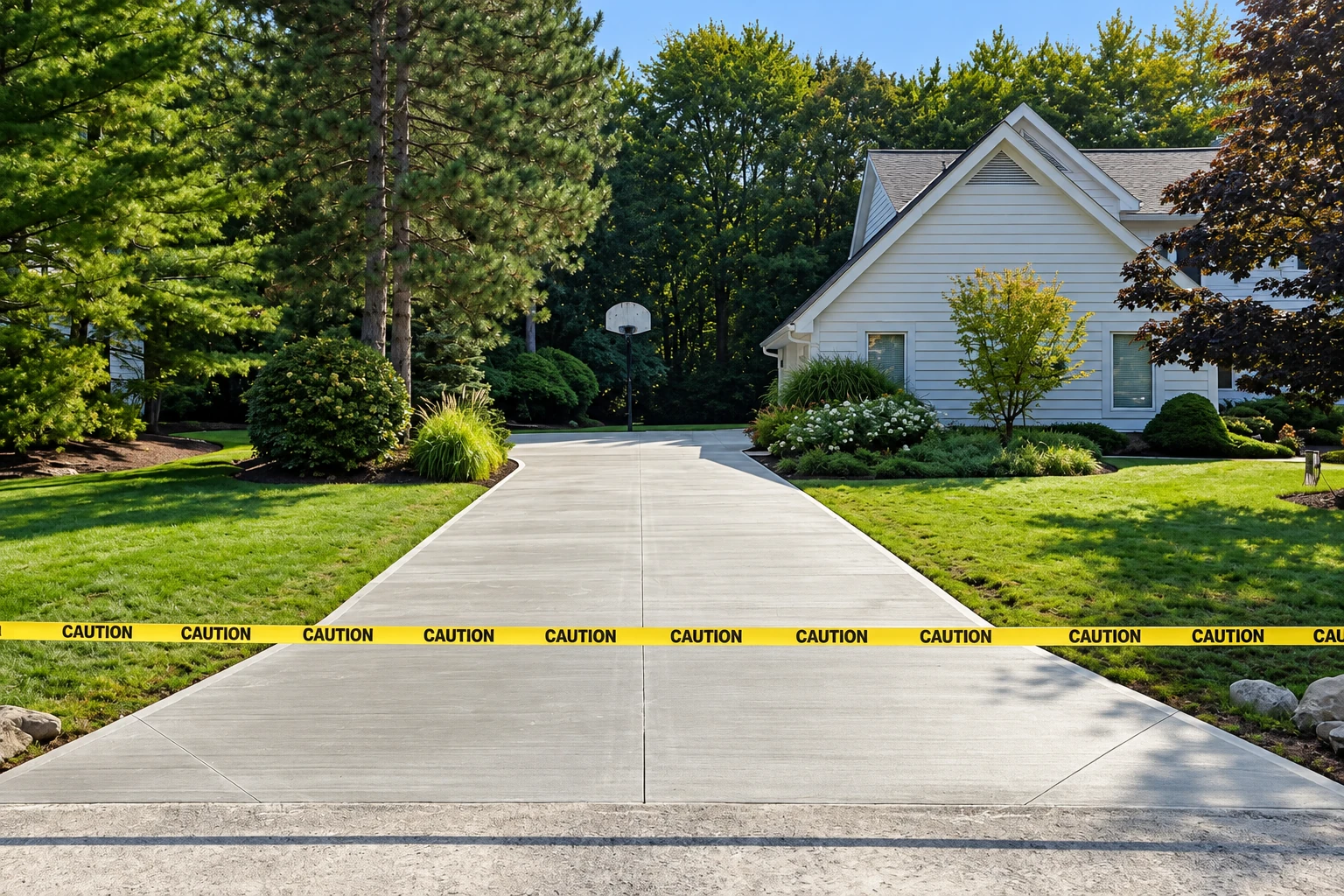
Concrete sidewalk building in Lewiston, ID is the whole job from the ground up. We prepare the ground, form and pour the walk, then finish and cure it, so you end up with a firm path that doesn't turn slick when it's wet.
Most people call when the old walk has started tripping people or holding water, or when there's never been a real path to the door. The price mostly turns on the walk's length and width, how much old concrete and soft dirt has to come out, and whether a driveway crosses it, while the schedule turns on the permit check and a pour date the weather allows. Before anything starts, we check with the city or county office that covers your address and tell you what they said. When I come out, the written estimate gives you your own figure.
Why Lewiston homeowners call Lewiston Concrete for sidewalks
The owner looks at your walk
I come out, look at your walk and write the estimate, then I'm on site running the crew when we form, pour and finish. The person who quoted the job is the one watching it.
Flatwork on both sides of the line
We've been in business since 2017 and work on both sides of the state line. We're best known for flatwork like walks, patios and driveways, where the prep under the slab matters as much as the finish.
Licensed and insured, paperwork upfront
We're licensed and insured. On a contract over $2,000 to work on your home, Idaho requires a general contractor to give you a disclosure statement before you sign, so expect one from whoever you hire.
If your walk trips people or holds water, call or send us a note and I'll come out and look at it.
How we build a concrete sidewalk
We start by digging out the old walk or the topsoil and roots, because organic dirt breaks down and settles, then we compact the subgrade, the dirt the walk sits on, so it stays even where it crosses a utility trench or meets the driveway. I check where the water runs so the walk sheds rain away from the house, and if the walk reaches the street, I check with the city before we dig. Where a car crosses, we form a thicker, heavier section, since a walk built for feet can crack under a truck. After the pour we float the surface and drag a broom across it for a light texture, cut control joints, which are grooves that give the concrete a straight place to crack, and start curing right away, keeping the new concrete from drying too fast so it gains its strength. When budgets get tight, the base is what people want to cut because nobody sees it on day one, and it's the last thing I'll cut, because a walk poured on raked dirt settles with the dirt.
If the walk leads to a garage whose floor has cracked or sunk, we also pour garage floor concrete. If you'd like color, a pattern or a border along the path, that's decorative concrete, and we'll pick a finish that still gives you grip.
Replacing an old walk
This suits a walk that's sunk, heaved or broken up, because we tear it out, haul it off and rebuild the base underneath. Pouring new concrete over failed ground just brings the same problems back.
A new walk where there wasn't one
This suits a worn dirt path or a yard with no real way to the door. We plan the route and the drainage first, then dig out the topsoil so the walk sits on packed ground.
How do you know your sidewalk needs replacing?
Slabs sunk or lifted
One section sits higher than the next and people catch a toe on it. Usually the ground underneath settled or washed out, and that edge tends to grow the longer you wait.
Cracks that keep widening
A hairline crack is normal, but one that keeps opening or breaks the walk into loose pieces usually means the base has let go. Patching won't hold once the slab is moving.
Puddles after it rains
Water sitting on the walk or running toward your foundation means the slope is off. Standing water soaks the ground below and freezes in the cold, so the trouble spreads.
Flaking or pitted top
The top layer coming off in thin flakes is called scaling, often from freeze and thaw or deicer on a mix that couldn't take it. Once it starts, the surface keeps wearing down.
What happens after you call about a sidewalk?
Call and I come out
Call or send a message and I'll come look at the site with you. Then you get a written estimate spelling out the prep, the mix and the joint layout.
We sort permits and pour
Once you're ready, we sort out the permit question and pick a pour date with the weather in mind. I'm on site running the crew from forms to finish.
I stay through the cure
I stay with the job through curing, and we pull the forms and clean up. You'll hear from me when the walk is ready for foot traffic.
Sidewalk questions we hear in Lewiston
Here's what people in Lewiston ask most about a new walk. If yours meets a driveway, a street or a slope, ask me about it when I come out.
How much does a concrete sidewalk cost in Lewiston?
Installing a concrete sidewalk across the US usually costs about $12 to $14.50 per square foot. That's a national figure for the work, not our price, and your walk's size, how much old concrete comes out and any heavier driveway crossing will move yours. After I look at the job, the written estimate gives you your own number.
Do I need a permit for a new sidewalk in Lewiston?
Yes, the City of Lewiston requires a Right-of-Way Permit for new or replacement sidewalk and for any work in the right-of-way. The city's standards set the minimum for how both public and private work gets built inside city limits, and city staff will talk through your project by phone, email or at the office to say whether you need a permit or a plan review. Outside Lewiston the address decides the office, so we check with whoever covers your property, tell you what they said and handle the application and inspections if one's needed.
How do I keep a new concrete sidewalk from scaling in winter?
Start with an air-entrained mix, concrete with tiny air bubbles that give freezing water room, and go easy on deicer the first winter. Concrete Alberta, an industry group in Canada, calls air-entrained concrete a must to prevent scaling, so ask every contractor you're comparing whether their quoted mix is air-entrained, and my estimate names the mix. The Michigan Concrete Association advises using as little deicer as you can on new concrete until it's a year old, so plan on shoveling or another way to handle ice that first season.
Will a new concrete walk be slippery when wet?
It shouldn't be, as long as it gets a textured finish instead of a slick troweled one. A very smooth troweled surface can be hazardous when it's wet, and the city's standards look for a floated, uniform, light broom finish across the whole surface. If you want a sleeker look, weigh it against your footing on rainy and icy days before you pick it.
What causes a new concrete sidewalk to crack?
Concrete shrinks as it cures, so nearly every slab cracks somewhere, and a poorly packed base makes it worse. What I can control is where and how bad, with a packed base and the control joints we cut, so a crack usually runs along a joint instead of across the walk or into a trip edge. I'd rather tell you that now than surprise you later.
Should I repair or replace my cracked sidewalk in Lewiston?
If the slabs have sunk or heaved, replace it, because the base under them has failed and a patch or new topping sits on the same bad ground. A walk with a few tight cracks that's still level can sometimes be left alone or cut out and replaced in sections. I'll tell you which one yours is when I come out, even if the answer is the bigger job.
Get a written estimate for your walk
Send the walk's rough length and width and whether it meets a driveway or the street, and we'll reply within one business day. I'll come out for a free on-site look, no obligation, then send a written estimate.
Concrete walks and paths
Other concrete work near the walk
Garage floor concrete
If the walk leads to a garage with a cracked, dusty or sinking floor, a new slab there gets the same packed base and joint planning.
Learn moreDecorative concrete
If plain gray doesn't suit the front of your house, color, patterns and borders can dress up a path while still giving good footing.
Learn more