Concrete retaining walls in Lewiston ID - a wall that drains and holds your slope
A bank that keeps slumping onto your yard or driveway can be held back with a poured wall built to drain water and hold the grade.
Plan your retaining wall before anyone digs
A wall is hard to change once it's poured, so it pays to sort out the drainage and the right kind of wall while it's still just a plan.
Is a poured concrete retaining wall right for your slope?
A concrete retaining wall in Lewiston is a solid wall poured into forms that holds back a change in grade, like a bank above your driveway or a hillside behind the house, so the ground stays where you want it and you get usable flat space.
Most people call us when a slope keeps sliding onto a driveway or patio, or when they want to cut a level spot into a sloped lot and need something to hold the dirt back. The price moves with the wall's height and length, where it sits on the lot, how easy it is to get a crew and a concrete truck to it and how much steel rebar it needs to hold together under load, and a poured wall also carries the cost of the forms and the curing time. The schedule turns on the permit answer, the weather on pour day and the curing wait before we can backfill, which is the soil going back behind the wall. I'll come look at your slope and then send a written estimate with your own number on it.
Why Lewiston homeowners call Lewiston Concrete for retaining walls
I price it and run it
I come out to look at your slope and write the estimate, and I run the crew when we form, pour and finish. So the person who planned the drains watches them go in.
Doing concrete work since 2017
I learned concrete on my own place in Lewiston and on job sites, then started this business in 2017. Concrete gets one shot, so I put the most care into the parts you won't see later.
Licensed and insured, with clear paperwork
We're licensed and insured. Idaho's rules call for a general contractor to give you a disclosure statement before a home contract over $2,000, so ask for it from anyone you're comparing.
On a retaining wall, the drainage behind it matters more than the face you see, so send me a few photos of your slope and I'll come take a look.
How we build a concrete retaining wall
Water behind a wall is what causes trouble, so I plan the drainage before anything else, looking at where water runs on your lot and where it can go. We dig out and pack a firm base, set the forms and the rebar, and pour the wall in one piece. Behind it goes gravel and a drain line that can be cleaned out later, so a silted-up drain gets flushed instead of buried for good. Once the wall has cured, we backfill and shape the soil to send surface water away from it. If your slope would be better served by a block wall, I'll tell you that at the estimate rather than sell you forms you don't need.
A retaining wall is usually one piece of a bigger change to the yard. Holding back a bank can open up level ground for one of our concrete pool decks, and digging into a hillside for a shop or garage leaves room for concrete floor installation once the wall is up. When we plan the wall and the slab together, the water from one doesn't end up under the other.
Poured concrete wall
One trade guide favors poured concrete when a wall needs a hard one-piece face, has to fit a tight space or doubles as a foundation. That makes it a good fit for a cut right beside a driveway or along the low side of a building.
Segmental block wall
For most landscape grade changes, the same guide favors segmental block, stacked concrete units that go up faster with no forms or cure time. If that describes your slope, I'll say so plainly at the estimate.
How can you tell a retaining wall is in trouble?
The wall leaning out
The top of the wall is tipping toward the yard. That's usually pressure from water or soil behind it, and the longer it goes, the more likely it needs rebuilding instead of repair.
Seams pulling apart
Joints between sections, or between the wall and a step or slab, are opening a little wider each season. That often points to water pressure, and catching it early keeps the fix smaller.
New cracks in the face
Fresh cracks are showing up, especially ones that widen or seep after rain. Water usually has nowhere to go, and a drain problem fixed now tends to cost less than a wall that moves.
Dirt washing down the bank
There's no wall yet, but soil slides onto the driveway or patio after every storm. Left alone, it can undercut the edge of the slab and leave you fixing concrete as well as the slope.
What happens after you call about a retaining wall in Lewiston?
Call and I come look
Call or message us, and I'll come look at the slope and where the water runs. You get a written estimate that spells out the prep, the mix and the joint layout.
Permit, pour date, then pour
When you're ready, we sort out the permit question and pick a pour date with the weather in mind. We then dig, set forms and steel, lay the drains and pour.
Curing, backfill and cleanup
I stay with the job through curing, because the wall needs to gain strength before soil goes back behind it. Then we backfill over the drains and clean up the site.
Retaining wall questions we hear
These are the questions Lewiston homeowners ask before building a wall. If your situation isn't covered here, call or send a message about your own slope and I'll give you a straight answer.
How much does a concrete retaining wall cost in Lewiston, Idaho?
Retaining wall construction in Idaho usually costs about $35 to $40 per square foot, which is a statewide guide for retaining walls in general, not our price. Your own figure comes from the written estimate I send after seeing your slope, since the wall's size, access and steel all move it.
Do I need a permit to build a retaining wall in Lewiston?
Lewiston requires a building permit whenever a structure the building code regulates is built or altered, and the city's Building Services will talk your project over by phone, by email or in person to determine whether it needs a permit or plan review. If the wall reaches a curb, a sidewalk or the street, the city also requires a right-of-way permit for that work. Before we start, we check with the city or county office that covers your address and tell you what they said, and if a permit is needed we handle the application and work through the inspections with you.
How long does a concrete retaining wall last?
A concrete retaining wall lasts about 50 to 100 years on average, depending on how well it was designed and built, how it's kept up and the soil behind it. Careful design and steady upkeep decide how much of that life you actually get, and on most walls upkeep comes down to keeping water moving out from behind it.
What causes a retaining wall to crack or fail?
Poor drainage is by far the most common cause, because water that can't get out builds pressure behind the wall, and left alone those problems can grow into outright failure. That's why we plan the drainage as part of the design from the first visit. If your wall already shows the signs above, it's worth having someone look at it sooner rather than later.
How long does it take to build a poured concrete retaining wall?
A poured wall usually takes longer than a block wall, because building the forms and waiting for the concrete to cure both have to happen before backfill. The rest of the calendar depends on the permit answer and the weather on pour day, and I'll walk you through what to expect at the estimate.
How do I know what kind of drain a retaining wall bid includes?
Ask the contractor directly, because weep holes, small openings that let water seep out through the face, are likely to clog over the wall's life. Drains built so they can be cleaned out are more reliable, so if a bid doesn't say which kind it includes, ask how you'd clean them out later.
Get a written estimate for your wall
Send photos of the slope, the wall's rough length and height, and whether it reaches a sidewalk or curb. We'll reply within one business day to set up a free on-site estimate, with no pressure to book.
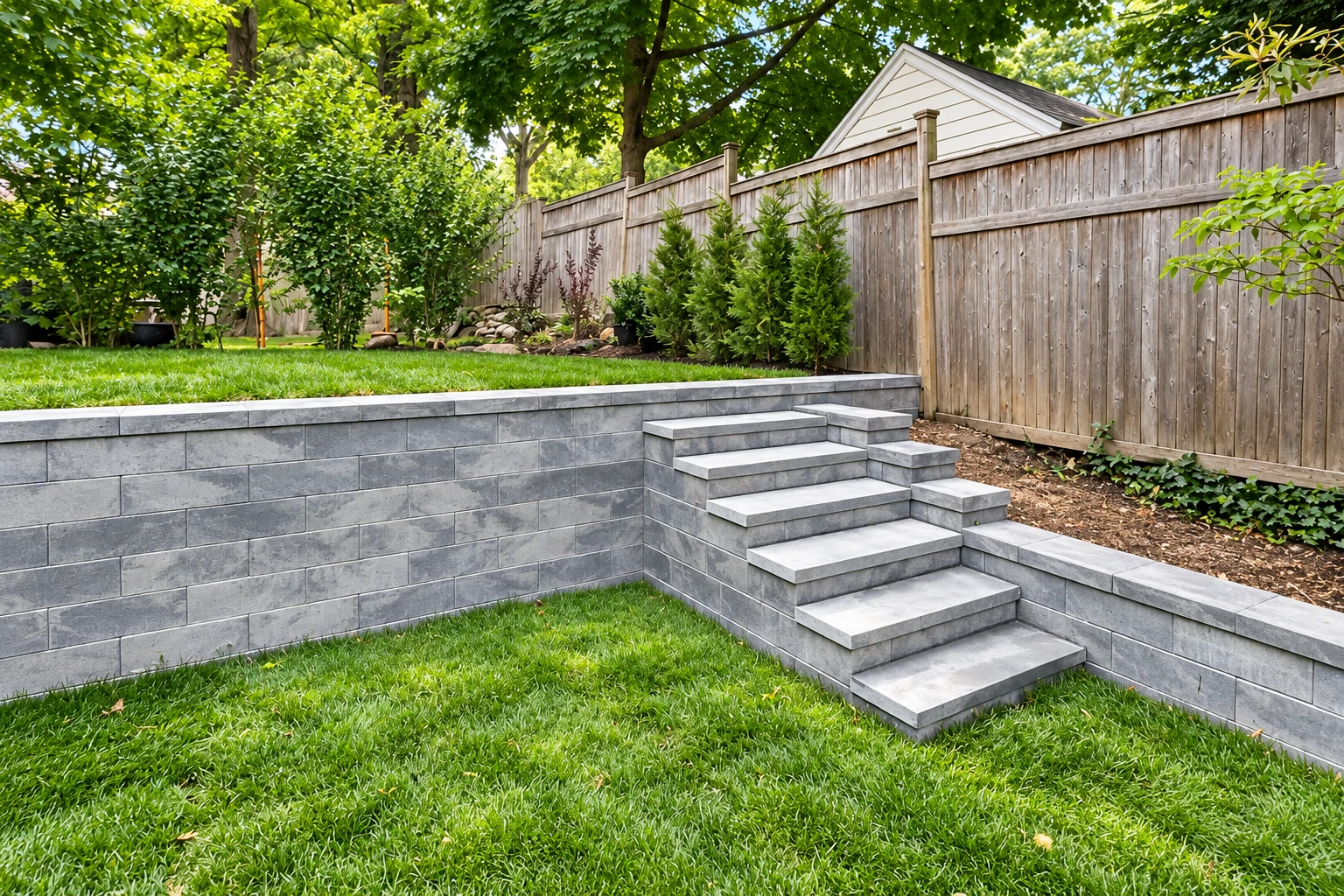
Retaining walls up close
Work that often comes next
Concrete pool decks
Building a level spot for a pool on a sloped lot usually means a wall first, then a deck around the water that sheds rain away from the pool.
Learn moreConcrete floor installation
When a cut into the hillside makes room for a shop, garage or basement, the floor slab is the next pour, and its base matters just as much.
Learn more